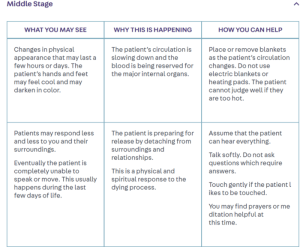
Emotional support for the dying is a crucial aspect of end-of-life care, encompassing a wide range of emotional, spiritual, and practical needs. This journey, often marked by complex emotions such as fear, grief, and uncertainty, requires sensitive and compassionate support from loved ones, healthcare professionals, and spiritual advisors. Understanding the unique emotional landscape of each individual facing death is paramount to providing effective and meaningful support during this challenging time.
This exploration delves into the diverse emotional needs of individuals approaching death, considering factors like age, personality, cultural background, and spiritual beliefs. We will examine various approaches to offering emotional support, including active listening, validation, and practical strategies for communicating effectively. The role of family dynamics and the importance of creating a supportive environment will also be addressed, alongside resources and guidance for managing the emotional burden of both the dying and their loved ones.
The ultimate aim is to equip readers with the knowledge and tools to navigate this sensitive period with grace and compassion.
Addressing Death and Dying

Facing death and the grief that follows is a universal human experience, yet each journey is deeply personal and unique. Understanding the psychological processes involved in grief and bereavement, along with effective coping strategies, can significantly aid in navigating this challenging time. This section will explore the stages of grief, healthy coping mechanisms, the impact of unresolved grief, and strategies for supporting grieving children and adolescents.
The Psychological Stages of Grief and Bereavement
Grief is a complex emotional response to loss, and while there isn’t a linear progression, Kübler-Ross’s five stages—denial, anger, bargaining, depression, and acceptance—provide a framework for understanding the emotional landscape. It’s crucial to remember that individuals may experience these stages in different orders, intensities, and durations. Some may not experience all stages, and revisiting previous stages is also common.
The importance lies in acknowledging and validating whatever emotions arise, without judgment or pressure to “move on” quickly. This validation allows for healthy processing of the loss and eventual healing.
Healthy Coping Mechanisms for Grief and Loss
Effectively managing grief requires a multifaceted approach. Journaling provides an outlet for expressing emotions and processing thoughts. The act of writing can be therapeutic, helping to organize feelings and identify patterns. Meditation and mindfulness practices can help regulate emotional responses and promote a sense of calm amidst turmoil. These techniques foster self-awareness and acceptance of difficult emotions.
Seeking professional support from therapists, counselors, or support groups offers a safe space to explore grief openly and receive guidance tailored to individual needs. These professionals provide valuable tools and strategies for managing grief’s challenges.
The Impact of Unresolved Grief on Mental and Physical Health
Unresolved grief can significantly impact both mental and physical well-being. Prolonged or complicated grief can manifest as depression, anxiety, post-traumatic stress disorder (PTSD), or substance abuse. Physically, unresolved grief can contribute to cardiovascular problems, weakened immune systems, and other health complications. For example, studies have shown a correlation between prolonged bereavement and increased risk of heart disease.
The emotional strain of unresolved grief can manifest as chronic pain or other physical ailments, highlighting the interconnectedness of mental and physical health. Seeking professional help is crucial to prevent long-term negative consequences.
Supporting Grieving Children and Adolescents
Supporting children and adolescents during bereavement requires sensitivity, patience, and age-appropriate communication. It’s essential to create a safe and supportive environment where they feel comfortable expressing their emotions without judgment.
Strategies for supporting grieving children and adolescents include:
- Open and honest communication: Use age-appropriate language to explain death and answer their questions honestly, even if difficult. Avoid euphemisms or overly simplistic explanations.
- Allowing for expression of feelings: Encourage them to express their grief in ways that feel comfortable, whether through talking, drawing, playing, or other creative outlets.
- Maintaining routines: Maintaining consistent routines provides a sense of stability and normalcy during a time of upheaval.
- Seeking professional support: Child and adolescent therapists specialize in grief counseling and can provide tailored support to help children navigate their grief.
- Remembering the deceased: Encourage healthy remembrance through sharing stories, looking at photos, or visiting meaningful places.
Illustrative Examples of Emotional Support
Providing emotional support to someone facing death is a complex and deeply personal process. The effectiveness of this support hinges on empathy, genuine connection, and a willingness to meet the individual’s unique needs. The following examples illustrate both effective and ineffective approaches.
Effective Emotional Support: A Case Study
Imagine Sarah, a 72-year-old woman diagnosed with terminal cancer. Her granddaughter, Emily, visits her regularly. Emily doesn’t shy away from discussing Sarah’s fears and anxieties about death, but instead listens attentively, validating Sarah’s feelings without judgment. During one visit, Sarah expressed intense fear of being alone. Emily responded by offering to spend more time with her, even sleeping over occasionally.
They reminisced about happy memories, shared laughter, and Emily helped Sarah organize cherished photographs and write letters to loved ones. This consistent presence, active listening, and shared moments of joy and reflection allowed Sarah to face her mortality with a sense of peace and acceptance. Emily, in turn, felt a profound sense of fulfillment in supporting her grandmother, finding strength in their shared connection amidst sorrow.
The emotional impact for both was significant; Sarah experienced a decrease in anxiety and an increase in a sense of closure, while Emily found purpose and deepened her bond with her grandmother.
Ineffective Emotional Support: A Case Study, Emotional support for the dying
Consider a different scenario involving John, a 60-year-old man facing a life-threatening illness. His son, Mark, struggled to cope with his father’s impending death. He avoided discussing John’s feelings, offering platitudes like “Everything will be alright” and “You’re strong; you’ll get through this.” He rarely visited, and when he did, the conversations were strained and uncomfortable. Mark’s avoidance stemmed from his own grief and inability to process his emotions.
He felt helpless and believed that expressing his feelings would only worsen the situation.
The avoidance of difficult conversations prevented Mark from truly understanding his father’s needs.
Offering platitudes instead of genuine empathy invalidated John’s feelings and left him feeling isolated.
Mark’s lack of presence and emotional unavailability created a significant emotional distance between him and his father.
This lack of emotional support left John feeling isolated and alone in his final days. The situation could have been handled differently if Mark had sought support for himself, allowing him to be more present and empathetic towards his father. He could have engaged in open and honest conversations, acknowledging the difficult emotions involved, and offering practical help rather than empty reassurances.
Active listening and validation of John’s feelings, even if Mark didn’t know what to say, would have fostered a more meaningful connection and provided much-needed comfort.
Ultimately, providing emotional support for the dying is a profoundly human endeavor, requiring empathy, patience, and a deep understanding of the individual’s unique circumstances. By acknowledging the complex emotional terrain of death and dying, and by utilizing the resources and strategies Artikeld, we can strive to create a supportive and meaningful experience for both the dying person and their loved ones.
The journey through grief and bereavement is a personal one, but with compassion and understanding, we can help navigate this difficult passage with dignity and grace.
Essential Questionnaire: Emotional Support For The Dying
What are some signs that someone nearing death needs additional emotional support?
Increased anxiety, withdrawal from loved ones, expressing regrets, difficulty sleeping, changes in appetite, and persistent sadness are all potential indicators.
How can I help a dying person who is angry or resentful?
Validate their feelings without judgment. Listen actively, offer a safe space for expression, and focus on understanding their perspective. Professional counseling may also be beneficial.
What if I don’t know what to say to someone who is dying?
Your presence is often more valuable than words. Simple gestures like holding their hand, offering a comforting touch, or simply sitting quietly can be incredibly supportive. Focus on listening more than speaking.
How do I cope with my own grief while supporting a dying loved one?
Seek support from friends, family, support groups, or therapists. Prioritize self-care, including sufficient rest, healthy eating, and engaging in activities that bring you peace.